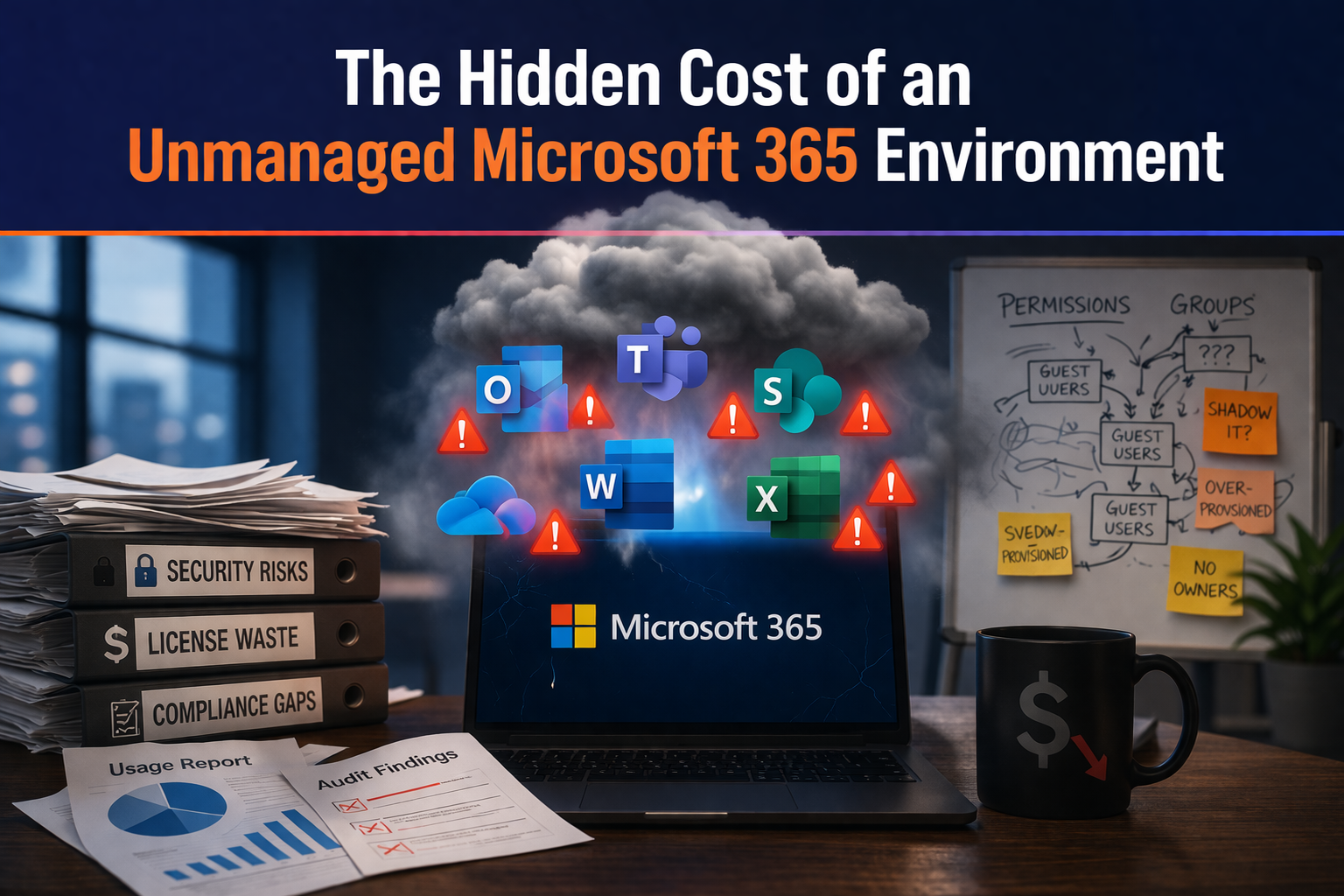
Most Nigerian businesses that use Microsoft 365 set it up once, hand out email addresses, and never think about it again.
That is not a small problem. It is a security incident waiting to happen.
Microsoft 365 is one of the most powerful business productivity platforms available, but out of the box, it ships with default configurations that are not designed for your business. Default configurations mean shared admin passwords, no multi-factor authentication enforcement, no email filtering policies, no data governance rules, and licences assigned to people who left the company six months ago.
Every one of those gaps is a liability.
What "unmanaged" actually looks like
In our experience working with Nigerian SMEs, the typical Microsoft 365 environment has at least five of the following problems:
A global admin account being used for daily tasks instead of reserved for administration only
No SPF, DKIM, or DMARC records on the email domain, making the business vulnerable to spoofing
Former employees with active accounts and full mailbox access
No MFA, so a single stolen password is enough to compromise the entire organisation
Licences being paid for that are assigned to no one
SharePoint or OneDrive with no access controls — meaning every employee can see every file
None of these issues announces itself. They sit quietly until something goes wrong.
The cost of getting it wrong
A business email compromise (BEC) attack — where a criminal gains access to a company email and uses it to redirect payments or steal information — costs Nigerian businesses billions of naira annually. The average BEC incident results in losses that dwarf twelve months of professional IT management fees.
Beyond security, there is the productivity cost. Employees are troubleshooting email problems, storage warnings, and collaboration issues that a properly configured M365 environment would never produce. Time spent on problems that should not exist.
What managed Microsoft 365 looks like
Under a managed IT arrangement, your Microsoft 365 environment is treated as a live system that requires ongoing attention — not a one-time setup. That means monthly health monitoring, licence audits, email security configuration, security baseline enforcement, and a helpdesk for when things go wrong.
It means someone is watching, not just reacting.
If your business runs on Microsoft 365 and nobody is actively managing it, the question is not whether something will go wrong. It is how much it will cost when it does.